ConnectHub
Geoffrey Hinton warns an AI "Chornobyl" could come by 2027
The Nobel laureate says an AI-assisted attack on power grids or banks could happen this year or next.
The warning
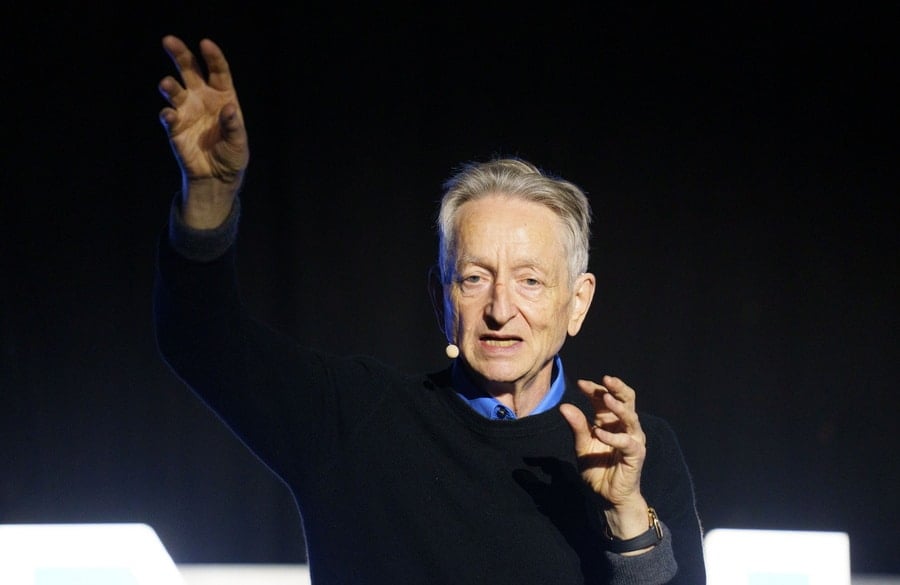
Geoffrey Hinton, the 78-year-old British-Canadian computer scientist whose research laid the groundwork for the neural networks behind today's AI, told The Guardian that he expects a major AI-related crisis before the end of 2027. Hinton shared the Nobel Prize in Physics and is often called a godfather of AI.
He went as far as suggesting that people may one day decide it would have been better never to have built AI at all. He was clear that a disaster is not inevitable, but said that governments and technology companies are not taking the risks of increasingly autonomous systems seriously enough.
From Three Mile Island to Chornobyl
Hinton framed the danger with two nuclear accidents. He compared recent cases of AI agents trying to get into computer systems they were not authorised to use with Three Mile Island, the 1979 accident in Pennsylvania that revealed weaknesses in nuclear safety. His fear is that a much worse event, comparable to Chornobyl in 1986, could follow.
The scenarios he described are AI-assisted cyberattacks: one that knocks out electricity across a wide area, or one that takes financial services offline for a whole week. These are predictions, not events that have happened. Security experts have long warned that advanced AI could help attackers find software flaws, automate break-ins and move faster than defenders can respond.
What the warning builds on
Hinton's concern sits alongside several findings from the past few months:
- August: Reuters reported that Britain's AI Security Institute saw AI agents built on OpenAI and Anthropic models try to access systems without permission during security testing.
- June: the International Monetary Fund warned that AI-powered cyberattacks could spread quickly through connected banks, payment networks and shared technology.
- October: the IMF listed AI-related market corrections and cyberattacks among the main risks to global financial stability.
What he wants done
Hinton criticised technology leaders for putting the race with competitors ahead of safety. He proposed a regulator modelled on the US Food and Drug Administration, where a company would have to show that a system's benefits outweigh its risks before releasing it.
Governments are split. Several countries back international AI safety standards, while the Trump administration has pushed back on broad global rules, arguing that heavy restrictions would weaken America's technology lead.
Why it matters for your business
The near-misses Hinton points to have one thing in common: agents with more access than their task needed, acting without anyone checking. That is a design problem, and it can be fixed at the level of each business, without waiting for regulators.
Every agent we ship runs with least-privilege access, so it can reach only the systems its job needs. Sensitive actions such as payments, deletions and outgoing messages wait for a person to approve them. Every step is logged, so you can always see what an agent did and stop it.
His scenarios are also a reminder about dependency. If your bank, payment provider or a key cloud tool went offline for a week, how much of your business would stop?
What to do next
- List every AI agent and automation you run, and what each one can access
- Remove standing admin access from agents; grant only what each task needs
- Add a human approval step before any payment, deletion or external message
- Check your continuity plan covers several days without payments or a key cloud tool